If you are familiar with today's tech world, you would know about B2B and B2C mobile applications. Both are leading the app industries and have different features and user interfaces.
However, if you are going to create an application and aren't familiar with their differences, then it's important to do so. Without that, you won't know which of either app type suits your user requirement. To help you out, here's a quick brief on the same:
What are B2B and B2C apps?
As we all know, B2B is abbreviated for business to business. So, you can get the meaning from the name itself. B2B applications are created for a particular requirement or task. The primary goal of these applications is to connect with other businesses, clients, or even workers of the organization.
Simply put, the application focuses on marketing any services to the entire business. B2B applications ensure better brand awareness, revenue, customer engagement, and boost conversion rate. Besides being popular among companies, B2Bs are constantly rising in application stores.
Likewise, B2C is abbreviated for the term business to consumer. Again, from the name, it's clear that this application type targets the consumer/customers. These applications are among the most common types you will find today in the play store. They aim to assist the customers so that they can buy products or services from the business. Usually, there are three types of B2C applications:
Stand-alone Applications: These applications are created by businesses to market their own products.
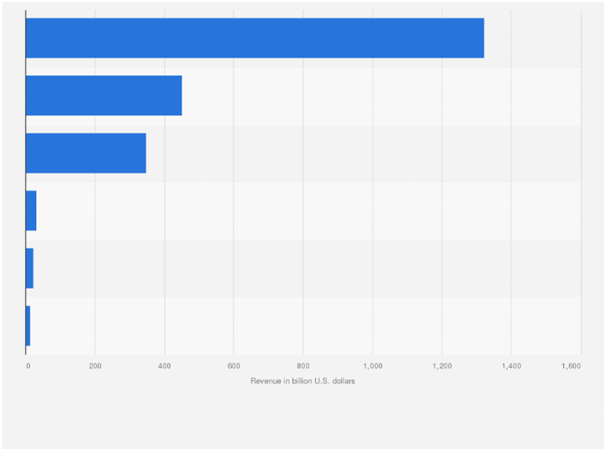
E-commerce Applications: You must know about the popular website Amazon. That's exactly what an E-commerce application is. It's a digital store that features products from different brands for customer purchase. Currently, Amazon accounts for 13% of the eCommerce market.
Mobile Loyalty Application: These applications run loyalty programs where customers can get some winning points. Moving forward, these points are traded off for usable rewards. Businesses build these applications to boost their sales and get new customers.
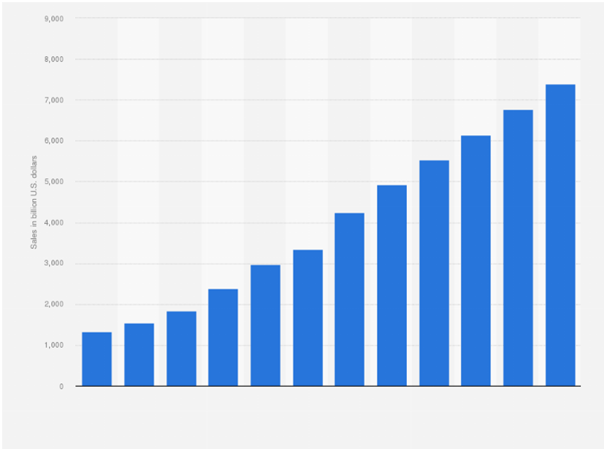
Based on the rising trend, it's predicted that B2C eCommerce can grow 85% more by the year 2030 (as compared to 2019).
What's the difference between B2B and B2C mobile apps?
Now that you are familiar with the basics of B2B and B2C applications, let's understand the difference between the two:
Separate use cases
Both B2B and B2C have different cases. While the former is related to resolving issues, the latter aims to attract customers to boost sales. However, unlike B2C, B2B does not require attractive layouts or presentations. Also, it doesn't require long visit times or customer engagement as such.
Number of users
B2B apps have less number of users than B2C. That's because B2B apps are designed for businesses to connect with the businesses. Therefore, it's mostly focused on in-house individuals. Likewise, B2C is for a large number of audiences who are capable of becoming potential customers. Simply put, it's for the general public. So, comparatively, B2C has wide-scale users.
Cost
The cost is generally higher for B2B applications than B2C ones because of their target audience. B2B intends to convert an entire business. Thus, if a B2B company invests money in online lead generation, the per-lead cost will be much higher.
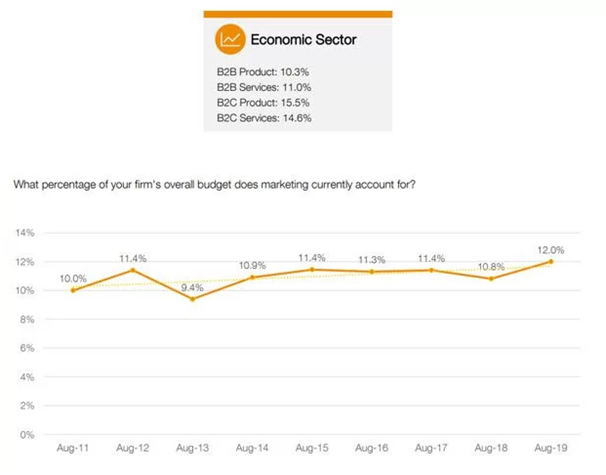
Likewise, B2C apps can generate leads organically or through marketing campaigns and advertisements. Thus, the marketing cost will be reasonable for the same. Speaking of values, the marketing budget for B2B products and services is around 10.3% and 11%, respectively. This is less than 14.6% to 15.5% for B2C.
Need for application updates
B2B applications require lesser updates as compared to B2C ones. Let's explain why:
As mentioned in the use case section, B2B apps are focused more on problem-solving. They are not like B2C apps that attract customers to ensure their longer stay. Thus, there are comparatively fewer requirements for upgrades. Now, this does not cut the need for updates completely.
of course, it's important to update B2B apps, but that's quite less than B2C ones. However, as businesses prefer consistency in applications, it's best to develop a good design from the start for B2B apps and maintain the same.
Monetization strategies and business models
B2C applications have numerous sources of profit as compared to B2B applications like paid subscription plans, exclusive features, and advertisements. B2B applications, on the other hand, depend on licenses, subscriptions, advanced features, etc. They also have different business models, contention, and objectives. For example, with a global market of USD 3.42 trillion (2020), competition in B2C is higher than that of B2B.
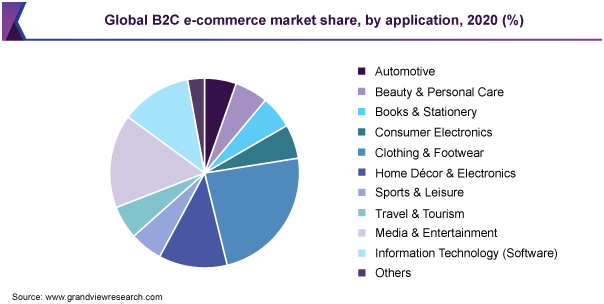
So, it's not easy to hold on to customers easily in a B2C business. This also means they have to adopt large-scale marketing strategies like SEO content, social media content, newsletters, etc., to spread their business. They also have to use effective tactics like Skyscrapper techniques to rank the blogs. However, as B2B apps concentrate on particular businesses, they do not have such extensive needs.
Conclusion
Hopefully, now you know the difference between B2B and B2C applications. Application development depends on your business purpose. So make sure to decide on that before choosing between B2B and B2C apps.